Author: Britt Avery

navigating common potholes + stumps with a (visible) business plan

Over the last few months, I’ve had some great conversations with entrepreneurs—over A.M. beverages, P.M. beverages, brunches, lunches, dinners, just swinging by their shops—you name it. What’s surprised me most is how many people either starting a business or who’ve been in the game for a few years are still flying without a concrete (tangible) business plan.

I can’t say I have it all figured out (nor will I ever), but I can share that I have a flexible plan written out for every facet of Bloom and Boost that outlines where I’d like to have my numbers and systems in the next 3 months, 6 months, 1 year, 2 years, all the way out to 5 years (yes, I have small and large milestones for 2029). Each of those outlines have action items that allow me to progress toward the milestones throughout the next several months and years, including a plan for:

  • client acquisition and retention (right on target)
  • revenue targets (283% above target)
  • team growth (200% above target)
  • operational systems (58% above target)
  • marketing and outreach (15% below target)
  • service development and diversification (right on target)

Writing down your vision can feel like an A.B.C. in an A.B.C. (Another Bothersome Chore in an Already Busy Calendar). But here’s the thing: whether you’re aiming to scale into a massive business or just stay sustainable, you need a business plan to make that happen.

“Writing down your vision can feel like an A.B.C. in an A.B.C. (Another Bothersome Chore in an Already Busy Calendar).”

Without a plan, you’re far more likely to hit some stumps + potholes along the way—obstacles that can trip up even the most experienced business owners.

Let’s run over four of the most common stumps + potholes I’ve either seen or have been warned about, and how you might be able to navigate around them to keep your business moving forward.

no clear direction (the ‘lost in the woods’ stump)

I remember when I first started mapping out the future of Bloom and Boost. Without a clear roadmap, it felt like I was lost in the woods.

But when I finally took the time to map out my 3-month, 6-month, and 1-year goals (not just in business, but also personal and professional goals), everything gradually became more manageable. Setting milestones felt like placing simple yet recognizable trail markers—measurable points of reference—that have continued to help me stay on course throughout the journey.

One of my close friends (also a small business owner) recently shared the video below with me, and it fits so well with the overall meat of this content.

We talked over coffee last week about how important it is to have a vision for your business, and how in order for it to be a vision, you’ve got to be able to see it (literally).

Going with the flow (like my man in the red kayak) will push you to exhaustion, defeat, and will cause you to turn over and sink, along with your bank accounts.

If you’re feeling lost in your own business journey, here’s how you can start setting your trail markers:

Make it visible (i.e. open up a notebook or a Word/Google doc):

Even if it’s messy at first (call me up, and I’ll share my file cabinet of endless spreadsheet drafts), get your ideas on paper. Outline your vision, goals, and the steps you need to take to hit those milestones.

Set your trail markers within a realistic and visible distance:

Break down your short-term and long-term goals into manageable steps with specific timelines. Don’t set your milestones too far out, and do NOT keep it all in your head. Your brain may arguably be smarter than a computer, but you (human being) are not a computer. Get ’em on paper, on the computer, or both.

failure to adapt (the ‘shifting ground’ pothole)

Back when the pandemic hit, so many businesses were knocked off course.

For a college student who didn’t need to have a job to survive (shout out to compassionate parents), I had the luxury of analyzing dozens of businesses and organizations scramble to adapt, while others with flexible plans were able to weather the unprecedented storm more easily. Imagine being Zoom, Clorox, Uber Eats, or even just a home-improvement store, a streaming service provider, or a telehealth business. So many of those businesses blew up in 2020 and 2021 because they had a plan and doubled down when it came time to take action and adapt.

The summer of 2020 and the handful of months to follow taught me that a good business plan isn’t one that’s “adaptable” in theory, but that is adaptable through proactive planning and practice.

There are a handful of my friends, family, and some previous clients (prior to Bloom and Boost) who have gotten stuck in their own ways and missed out on either new opportunities or were not prepared to diversify before one of their options became unavailable or not as profitable as it once was before. This is usually because of a business plan that lacks the ability to adapt along with being too attached to the initial vision.

The reality is that the ground is always shifting beneath us. That is life, business, and politics in a nutshell—nothing new. If you aren’t prepared to adapt, you’re risking the chance of falling into a pothole that can slow down or halt your momentum entirely.

While no plan can predict every twist and turn, here are some steps that might help your business stay adaptable when things shift unexpectedly:

Continuously review and adjust:

Make time every few months (be that quarterly or bi-annually) to revisit your plan and adjust based on what’s working (or what’s not). Having others around that you trust to keep you accountable and challenge you are so solid when it comes to these planning meetings.

Always be flexible:

Be willing to shift gears when market conditions change, or your audience decides to not show up and/or completely bails. Your plan should always allow for adjustments without losing sight of your overall goals or compromising the current trajectory of your business vision.

lack of sustainable growth (the ‘plateau’ pothole)

Before launching Bloom and Boost, one of my clients wanted to stay “small,” and didn’t want to scale much beyond where they were. But they quickly realized that staying small doesn’t mean you don’t have to grow.

Eventually, costs rise, your kids get older (and more expensive), and unless you adjust your pricing or increase your client base, your business stalls and every one of your competitors begin to roll right past you.

I’ve faced this myself—early on, I had to raise my rates to keep up with increasing expenses. It wasn’t easy (nor were the conversations with those clients), but it was necessary to maintain the quality of service I offered.

Too many businesses hit a plateau because they don’t plan for sustainable growth, even if they don’t want to become massive enterprises. If you’re worried about your business hitting a plateau, here are some easy (yet often presumed difficult) ways you can help your business continue to grow at a comfortable and controlled rate:

Be ready to scale:

Think about how you can scale processes—whether that’s hiring a part-time team member or automating tasks. Over the last several months, I’ve been preparing to hire part-time support for some time down the road in 2025, but didn’t think I’d get there till my milestone said I would. Just this week, two hires were made, and likely aiming for a third as I’m making way into the new year—all because of proactive planning, processes that work (and were tested before I started b+b), and because our clients are incredible.

Raise those rates:

Over time, your pricing needs to account for not only the value your business brings to the table and the quality of service offered, but also the rising operational costs and shifts in market demand. If you regularly revisit your pricing strategy with thoughtful consideration for your clients’ budgets and expectations (rather than testing how much they’ll tolerate), you’ll continue to keep your rates aligned with both their expectations and the financial health of your business.

the savior complex (the ‘i can do it all’ stump)

Many founders, especially perfectionists, get tripped up and trapped in the details, thinking no one else can do the job just right. This mindset will almost always stunt growth.

I’ve seen it with other business owners and have experienced it myself. It’s easy to fall into the savior complex, where you’re constantly fixing and refining, staying too involved in production and not trusting others to help you carry some of the weight or not wanting to create a burden for them.

Stepping back doesn’t mean losing control—it means trusting others to help carry the load so you can focus on scaling. I’ve learned that letting go of perfectionism and delegating not only freed up my time but allowed Bloom + Boost to grow faster than when I was managing everything myself.

Here’s some advice I’ve received that has helped me overcome this trap (both in my business and in my personal life):

Delegate wisely

Hiring the right people means enhancing, not losing control. I am not great at this, but as the needs of my client base have grown and they’ve instilled more trust in me, I have to reflect that same level of trust toward those that can help my business to scale. Trusting others to maintain (or grow) the quality of what you currently provide allows you to step back with confidence.

Trust the process

I feel like this is any new head coach’s slogan when entering a program that hasn’t had a winning season in a while. “Trust the process.” It’s somewhat cliche, but the meaning behind it is purely authentic, and infers that you’re going to need patience—something that all founders know is crucial to have in the early end of the game just as it is for new coaches. Forward progress beats perfection and letting go of the need to perfect every detail will almost always open up room for growth.

Step out gradually

If you don’t have the capital (like me) to hire before launching your business (also ~99% of founders), you know that your responsibility in running the business involves every role imaginable. As I’ve begun exploring part-time support and have created a vision for what it looks like to be partially removed from administrative and production efforts, I’ve slowly found more focus and clarity into how following my business plan might allow me to gradually scale Bloom and Boost.


Whether you’re just dreaming about starting your business or you’ve been at it for a good while, don’t underestimate the power of a solid, flexible, and scalable business plan. It doesn’t need to be perfect (mine sure as heck isn’t), but it does need to exist. And as the world and our personal lives keep changing, make sure you’re adapting your plan so you can keep growing sustainably—without getting overwhelmed.

Super simple recap of the potholes + stumps:

  • the “lost in the woods” stump: Without clear and visible milestones, it’s easy to lose direction in your business.
  • the “shifting ground” pothole: Adapting to change is key to staying ahead of the game.
  • the “plateau” pothole: Growth stalls when you don’t plan for sustainable scaling.
  • the “i can do it all” stump: Trying to do it all yourself leads to burnout—delegate and elevate to thrive.

Find your direction, stay adaptable, delegate wisely, and watch your business grow into something worth being proud about—all because you followed the plan.

Cheers,

Britt Avery

Founder, Bloom + Boost
britt@bloom-and-boost.com
(515) 532-7770
Let’s Connect!

creating your secret sauce: essential ingredients that keep ’em coming back

My partner-in-crime, Lindsey, was making tacos last night, and we decided to whip up some salsa with what we had around the house and in the garden. We starting chit-chatting about why the salsa wasn’t _____ and _______, and we were just missing _______. So we kept adding to the mix, and eventually gave up and enjoyed the tasty tacos she made and scooped what fell out of the taco shells with the extra tortilla chips. We wanted our salsa to “taste just like” [and we listed 3-5 of our favorite local Mexican restaurants that came to mind because of their awesome salsa and even-greater hospitality.

Ever feel like that with your business when you meet as a team on Mondays?

“We just need to be doing ____________, and we should re-allocate our marketing dollars here to _______________.”

Yup. It happens. In our ever-competitive world of business (be that small and local, or corporate and worldwide), standing out from your competition is as crucial as having the right ingredients in a recipe—it’s what continuously gives your brand its unique flavor that everyone craves.

Just like how Marvel keeps fans hooked with end-credit scenes (still have tears from the recent Deadpool end-credits cameo), or how McDonald’s and Chick-fil-A drive excitement with their seasonal arrival of the Shamrock Shakes and Peach or Peppermint Milkshakes, your business needs its own secret sauce. I’m talking about that unique something that makes customers say, “I’ve got to have that!” and come back for more.

But what does this secret sauce look like for your business? (especially if your business is not an exciting one)

How do you create those unique components that not only attract attention but also build a loyal following?

Right now, go grab your favorite bev + snack—mine’s a Mexican lager with jalapeño kettle chips—and let’s dive into the foundation for creating your business’s own signature flair.

gotta know your audience’s tastebuds

You wouldn’t serve a filet mignon to a vegan crowd or lettuce wrap tofu tacos to a group of body builders, right?

The first step in crafting your unique business foundation (your brand) is understanding what your audience craves. This means diving deep into their psychographics (their habits, behaviors, preferences, values, etc.).

  • Are they the type who loves a good laugh and engages with brands that don’t take themselves too seriously? (like Wendy’s or almost any insurance company these days)
  • Do they appreciate thoughtful, inspirational messages that align with their values? (like Ben & Jerry’s or Patagonia)
  • Are they drawn to bold, edgy brands that challenge the status quo? (like Doritos, Monster, or Black Rifle Coffee)
  • Do they value exclusivity and limited-edition products that make them feel special? (like Louis Vuitton, Tesla, or Gucci)
  • Are they more focused on getting the best deal, prioritizing value and affordability? (like McDonald’s, Walmart, or Costco)
  • Do they connect with brands that offer a sense of community and belonging? (like Starbucks, Harley-Davidson, or my Midwest favorite—Kwik Star)

Knowing your audience is about more than just demographics—it’s about understanding their vibe. Are they Marvel fanatics who’ll buy out tickets a month ahead and stick around for the end credits, or are they more of a “get the content and go” type like an order-ahead for Starbucks, Caribou, Scooters, etc.?

Once you get a handle on this, you can shape your unique offerings to match your audience’s desired flavors.

stir in a dash of creativity

Creativity is like the seasoning in a recipe—too little, and your dish is bland (like salsa round 1); too much, and it’s overwhelming (like our end-result salsa with 15-too-many things in it).

The key is finding the right balance that fits your brand’s flavor profile. This means not just copying a bunch of things from others that you like, but rather taking some time to sit down with others and craft an authentic identity (keep scrolling for a “mix of *authenticity”).

Here are a few examples:

During my time with Denovo, we came up with the idea of a ‘Booze Bag’ giveaway at trade shows and conferences. It wasn’t just about handing out branded company things (that many generally leave in their trunk or throw away); it was a playful, little-bit edgy, and attention-grabbing way to turn heads (literally), spark hundreds of valuable conversations, and generate leads that often would turn into incredible relationships and referrals. The Booze Bags became a memorable part of Denovo’s brand identity (and still is), driving both awareness, engagement, and providing a remarkable ROI for no more than a $40 cooler backpack and $100 or so in booze.

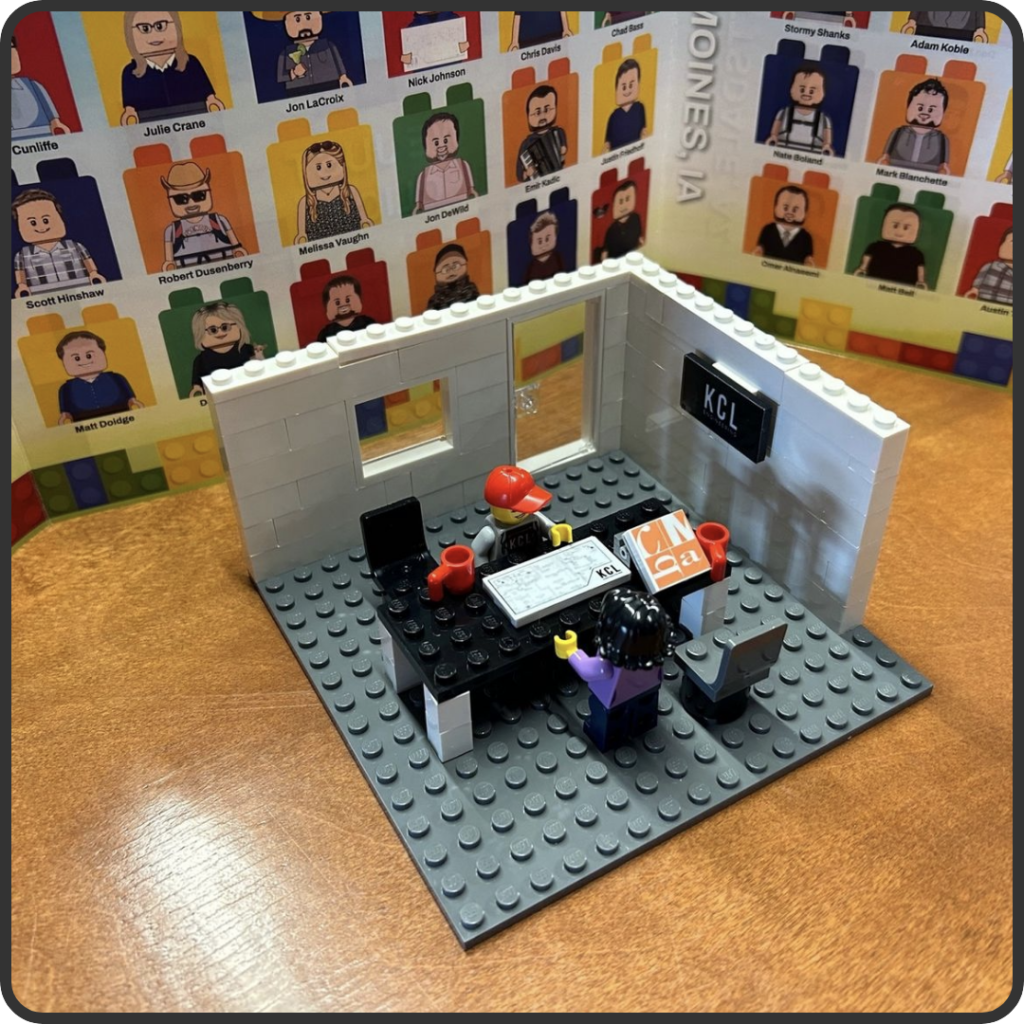
At KCL Engineering, the creative gears were already rolling fast and hard far before I came to the table. However, things got even more exciting after a brand refresh, and as they continued to have over 150 dozen (yes, around 2000 customized) KCL Cookies for an annual client “thank you” treat. Each year, the theme was different—turning staff members into characters like LEGO figures, medieval royalty and knights, or Peanuts characters, with the specific faces of those that worked with specific clients featured on the cookies.

We even had a LEGO set that could be built during the LEGO figure initiative for some of the top clients. This playful and personalized approach made KCL’s brand stand continue to stand out as a fun, innovative, and definitely un-boring engineering firm, adding another attribute as to why they were awarded the # 1 Top Workplace in Iowa for small businesses.

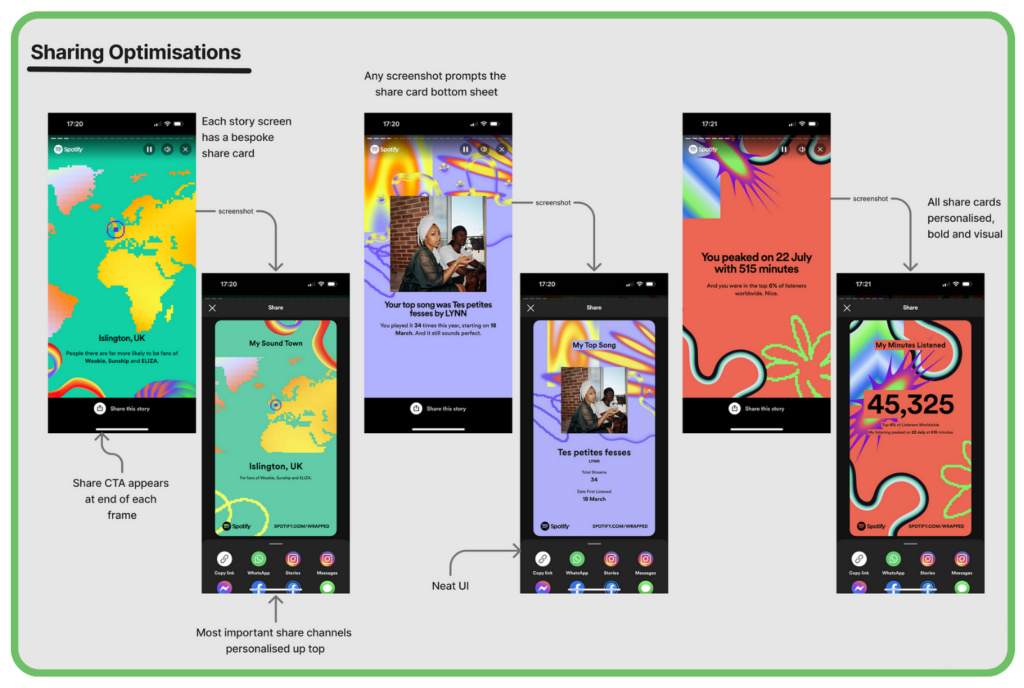
One that many of you know of, or have seen, is Spotify’ annual “Wrapped” campaign, where they provide users with a personalized year-in-review summary of their listening habits. This simple (yet super creative) idea not only engages their users (me, big time) but also encourages them to share their results, turning personal data into a ridiculously viral marketing tool.

Your unique *marketing sprinkles * (as it was called at KCL) could be anything—a quirky product that gets conversations rolling, a special event that gives others FOMO, or just an inventive way of engaging with your customers.

The key is to stir in that dash of creativity (not a copy + paste, but a creative thing YOU come up with) that makes your brand truly one of a kind.

add consistency – then let it simmer

Once you’ve got your creative idea, it’s time to let it simmer. This means don’t be obnoxious/attention seeking—just wait and see how it goes and make adjustments as necessary.

Consistency is key when it comes to building something that sticks (add Made to Stick and the dip to your reading list).

Marvel didn’t just create a single movie, think about throwing in Stan Lee and then add a single end-credit scene and call it a day—they made it a staple of their brand as their films began taking off in the late 2000s. Over time, fans learned to expect it, and now it’s part of the whole Marvel experience.

The same goes for Denovo’s iconic Booze Bags. Without their established industry presence and ongoing relationships, their success rate might be lower, even with the draw of a free giveaway. The Booze Bags are highly sought after at trade shows, not just as a free gift, but because of the hospitality, integrity, and down-to-earth fun that the team brings to every conversation. It’s such an easy way to get people talking about how Denovo could help them, and to secure valuable leads.

REI also nails consistency with their “Opt Outside” campaign (another one of my all-time favorites), which closes their stores on Black Friday and encourages people to spend the day outdoors (and with family). This bold move not only aligns with REI’s brand values but also reinforces their commitment to the outdoor community every single year.

If you’re offering a weekly deal, make sure it’s 1) profitable, and 2) happens every week. When I was working at a local Mexican restaurant back in 2014, we had an all-you-can-eat Taco Tuesdays for just $6.99 (with rice and beans……I know, right? Inflation, lol). Small-town customers, and eventually out-of-town customers, knew that every Tuesday, they could count on getting their fill, and it became a tradition that kept them coming back week after week. Los Altos is still kicking to this day, and it’s arguably (I’m bias) the best spot for food in small-town Story City, Iowa.

Consistency helps build anticipation and loyalty, as customers come to associate your “secret sauce” with your brand.

mix in *authenticity – the secret ingredient (and my favorite one)

Let’s be real—you can spot a fake from a mile away (and so can your potential customers).

That’s why authenticity has to be the secret ingredient in your recipe. It’s what makes your special offering(s) genuinely yours and not just another gimmick or wannabe attempt at what others are doing well.

When people see that you’re genuinely passionate about what you do, who you serve, and how you treat those in your company + community, it creates a connection that goes well beyond the transaction.

At KCL Engineering, the annual cookie theme wasn’t just a random idea—it reflected the company’s core values of innovation, attention to detail, and a dang good time (not a core value but might as well be one!) You very seldom see these guys not having fun because they’re doing what they love. By turning recognizable staff members into characters, the cookies became a celebration of the people behind the projects and the KCL brand, making the added holiday gesture feel authentic and personal to clients.

Disney is another brand that excels above and beyond in authenticity. Their themed experiences are not just attractions—they’re immersive and ageless stories that allow visitors of all backgrounds to live in the worlds they’ve always dreamt of. This sort of commitment to authenticity is what makes Disney’s experiences so magical and memorable (and allows them to charge what they do).

Incorporating your collective personal values, personalities, and brand story into your business will make it resonate deeply with your audience. It’s not just about what you’re offering, but how and why you’re offering it.

When people see that you’re genuinely passionate about what you do, who you serve, and how you treat those in your company + community, it creates a connection that goes well beyond the transaction.

serve with a side of surprise

People love surprises—especially the good kind that benefit them. Throwing in an unexpected twist can elevate your brand from good to unforgettable and the “go-to” ________ for what you do.

Nike also understands the power of surprise with their “Just Do It” campaign, which consistently introduces new and inspiring stories that resonate with their audience. These campaigns often feature unexpected athletes or messages that challenge the status quo, keeping the brand fresh and relevant.

Starbucks also knows the impact of surprise with their secret menu items (their medicine bomb is clutch for getting over colds) and their seasonal drink releases. Sometimes, it’s a new flavor that suddenly appears or a unique promotion. Whatever the case, Starbucks always keeps their customers engaged and excited, wondering what they’ll offer next, and rarely has them questioning why they’re spending $6 + tip for a 16oz “Grande.”

Every so often, try incorporating an element of surprise into your business. Whether it’s a random freebie for loyal customers or a surprise product drop (or a secret menu—these are always cool), these little extras can create a sense of excitement and keep your customers on their toes, wondering what the heck you’ll do next.

the big finish—your business’s legacy

As we wrap up, let’s talk about the endgame—your business’s legacy. What unique *thing* will you be known for? What will keep your customers coming back for years to come? The beauty of creating these special elements is that they can become the cornerstone of your brand’s identity.

Like Marvel, Spotify, Costco, or any sort of coffee/energy drink that didn’t just energize you but allowed you to accomplish more, your business has the potential to create something iconic—something that’s not just a part of your business, but an integral part of your customers’ lives.

When you mix up the right blend of creativity, consistency, authenticity, and surprise, you’re not just offering a product or service; you’re creating a lasting experience that your customers can’t roll without.

Moving forward, remember that your secret sauce is what:

  • makes your business unique
  • keeps your customers coming back
  • your customers will talk about long after they’ve left/they’ve invested into your offering(s)
  • will ultimately set you apart in a crowded market

Find your flavor, stir it up, continuously make sure your audience enjoys it, and watch your business become a must-have in the hearts and minds of your customers.

Cheers,

Britt Avery

Founder, Bloom + Boost
britt@bloom-and-boost.com
(515) 532-7770
Let’s Connect!

how + why I bought a new car while unemployed (a short story about committing to a future ROI)

For the past 2-3 years, I joked about getting a new car to replace my trusty (and rusty) 2000 Honda Accord that I bought when I was 14 years old (10 years ago).

Every time I talked about it while in my old car, I really thought my Honda was going to be offended and break down or have another maintenance issue (thankfully, only a few major things did over the 10 years).

While in between jobs and with little to no guaranteed income for about 2-3 months, I took a calculated risk and bought a 2018 Hyundai Ioniq — all in full, with cash.

^ jr. high me pretending I’m sitting on a Range Rover like I’m Ben Rector

Yes, it hurt my fiscally conservative heart for a good long while, but I believed in the short + long-term ROI from this purchase:

  • Safer + more reliable vehicle
  • 25 mpg < 50 mpg
  • Apple CarPlay for phone calls, voice texts, calendar, reminders (if you know…you know)
  • GPS + sound system
  • Increased confidence arriving to meetings
  • Reduced stress
  • More motivated to travel


committing yourself to a future ROI

Sometimes, making an investment is necessary for growth — even when it feels risky.

With the new car – it wasn’t something I impulsively bought from an ad that hit my screen, or something I drove by while in my old car. It was:

  • knowing the right people
  • having relationships with those I bought the car from and those I sold my old Honda to
  • and understanding the value of what I was buying and selling.

But it was a risk, yes. After buying this car, there’s no promise that I won’t have issues, get into an accident, or end up with other financial troubles where I begin to contemplate if I should have bought the car to begin with.

It all came down to this: the ROI was greater than the risk (ROI > risk).

Might sound like something a gambler would say, but it’s a heck of a lot less like gambling when the odds are in your favor, based on the credibility and reputation of what you’re investing in.

what’s holding you back?

I’ve had several conversations with people over the last few weeks about our collective hesitation to invest into a wide variety of things (see bullet points below), and there’s always something (usually a smart *something*) that’s holding each of us back.

  • Is it a new car to make sure you and your family get around safely, on time, and everyone feels great?
  • Is it a PS5 to play the new NCAA CFB 25, because you want the nostalgia and have bad FOMO? (this is a smart thing to wait for, lol)
  • Is it showing up and being present for your kids vs chasing your own career and “trying to leave them money when I retire”…?
  • Is it investing into your community…not for a pat on the back, but to show love and inspire others to do the same when they’re in a position to help others like them?

For some of you……what if you invested in your business or into your dream career?

Imagine:

  • growing your social media by 200% within 2 business quarters (July – Dec. 2022)
  • starting up a business in less than 2 months (late Nov. 2022 – early Jan. 2023)
  • building a brand in less than 2 weeks (did this last week for a “bloom” client)

……all things that I’ve been able to do alongside some incredible clients and teammates.

If it’s a worthwhile investment in the long run, wouldn’t you agree that the ROI is greater than the risk?

Thus far, every success story that I’ve looked into, or that I’ve been a part of, involves:

  • planting a seed (investing)
  • trusting the seed to grow with the right resources, guidance, and regular evaluation

and eventually:

  • seeing the growth
  • celebrating the ROI
  • reflecting on the investment before repeating the process again.

If you’re still hesitant or feeling like “now is just not the right time,” a calculated risk might be the catalyst you need to drive you toward your next big step or a long-overdue goal, just like it was for me buying my new car.

what’s your next move?

As you’re narrowing down your answer, sit on these three growth notes:

  1. Think about what seeds you want to (or maybe need to) plant today.
  2. Envision the growth you’d like to see by ______________.
  3. Don’t be afraid to take a calculated risk and invest in what might get you to ______________.

If you think any of our services might be worth investing in, either for you or for someone else: great! Reach out when you’re ready to get rolling with us, or even give us a heads-up ahead of time so we can prepare for when that time comes (some are scheduled as far out as winter of 2026).

If we’re not your next move, and you just happened to stumble upon this article: no worries at all! You are, however, encouraged to go find who + what that could be a great resource for your wants + needs.

Now, get after it!

Cheers,

Britt Avery

Founder, Bloom + Boost

rebrand or refocus – what’s the right move for your business?

In today’s fast-paced world, where trends change faster than the latest TikTok dance challenge, rebranding often feels like the go-to solution for declining sales, poor customer engagement, or a tarnished reputation.

Before you slap a new logo on your business or implement a new initiative to promote a specific mission/cause and hope for a viral moment, hold tight for 5 minutes.

I’ve taken some themes and “lessons learned” from business experts (such as Seth Godin, Diana Kander, Donald Miller, Chip & Dan Heath, Robert Solomon, and more), and developed this outline through my own vocabulary and creative spirit.

Take a deep dive into this article to better understand when a rebrand is right and when it’s time to roll up your sleeves to focus on the nuts and bolts of your business:


identifying the real culprit

Think of your business like the latest Netflix hit series — if the storyline (operations) isn’t compelling, no number of flashy graphics (rebranding) will keep viewers (customers) hooked.

Before diving into a rebrand, you have to identify the core issues affecting your business. Often, the symptoms that spark a rebrand are just that — symptoms.

For example: declining sales might be due to…

…a saturated market.
…poor customer service.
…outdated products.
…inefficient marketing strategies.
…a general lack of customer engagement.

Your brand image might not be as stale as you or your team think. Take a hard look at your business’s performance metrics, the feedback from your customers, the honest feedback from your team, and the current market trends.

Key questions to ask:

  • Are sales declining because of our brand or because of market conditions?
  • Is our customer service aligned with our brand promises?
  • Are our products or services still relevant and high quality?

If you’re a brick-and-mortar shop that hasn’t explored e-commerce yet, a food service/hospitality business that’s known for fast service and lower prices, or you’re selling Polaroids, DVDs, and newspapers — go sit down with your team and discuss business strategy before you drop thousands on a rebrand campaign.

when to refocus on your business

The simple answer — often and always. To break it down, here’s three common areas you can refocus on, and when to do so:

1. Operational inefficiencies

Imagine if Amazon Prime’s two-day shipping turned into a two-week ordeal. Operational hiccups can turn loyal customers away faster than you can say “unsubscribe.”

If your business struggles with delivery times, QA/QC, or customer service, these operational inefficiencies will destroy your brand faster than an outdated logo ever could. Streamlining your operations, regularly training your staff while providing them adequate resources, and improving your processes will likely bolster your customer satisfaction and loyalty.

2. Product/Service quality

Your brand is a promise, much like each year’s highly anticipated Marvel movie. If your products or services don’t deliver, customers will tune out.

Focus more on the opportunities for innovation, improving the quality of what you’re offering, and making sure that what you’re offering will meet the demands of your market.

3. Market position and Competition

Sometimes, the issue isn’t your brand but rather your current position in the market.

One of my favorite things to do for my clients is to map out their competition. By conducting a competitive analysis, it will become apparent where you stand and how you need to adjust your business strategy accordingly. This might involve refining who your target audience is, adjusting pricing strategies, expanding your product/service offerings, or just enhancing your overall marketing efforts.

I challenge anyone reading this to do the following if you’re not already: diversify your distribution channels.

By doing so, it’s going to allow your team to reach a broader audience with less effort after developing whatever that diversification system would look like for your business.

when a rebrand makes sense

1. Significant market shift

If there’s been a major shift in your industry or market, rebranding can help reposition your business to stay top-of-mind for your customers. This is particularly important if your brand image no longer resonates with your target audience or if you’re expanding into new markets.

2. Mergers and Acquisitions

When businesses merge or acquire others, a rebrand can help unify the new entity under a cohesive brand identity.

Think of Kum & Go and Maverick — or more simply, your favorite TV series crossing over into one episode. A rebrand can unify the new entity and make sure everyone, from employees, customers, and stakeholders, are all on the same page for the new vision.

3. Brand evolution

Just like people, brands evolve over time.

If your brand feels like your old high school boyfriend that appears to everyone as the small-town superstar, but behind closed doors, is unproductive and emotionally broken — you need to dump your brand, just like you hopefully dumped your boyfriend.

If your business has grown or changed its focus, a rebrand can signal this transformation to the market. This transformation generally involves updating your visual identity, your messaging, how you engage your customers, and aligning your core values to reflect your current (or updated) mission and vision.

avoiding the rebrand trap

Many businesses initiate a rebrand thinking it will solve all their problems, only to find themselves in the same position a year later. To avoid this trap, follow these steps:

1. Conduct a thorough (and honest) audit.

Before making any decisions about rebranding, you have to conduct a comprehensive brand audit. We’re currently in the process of doing this for one of our clients, and it is not an easy, rapid-turnaround feat.

This process involves analyzing your current brand’s strengths and weaknesses (SWOT analysis), understanding market perceptions and the statistical facts available, gathering customer feedback, input from owners and stakeholders, and what your competition is doing well, terrible, or not doing at all.

Capitalizing on what your competition is not doing yet is called ‘seizing an opportunity in the market’, and that is what generally blows a company up (usually in a good way).

2. Develop a strategic plan.

Rebranding should be part of a larger strategic plan. You need a clear vision of what you want to achieve with the rebrand and how it pairs up with your business goals.

If your rebrand is like a filler episode or a quick patch-up fix, you’ll be back to step one in 365 days.

3. Focus on consistency.

Consistency is key in rebranding. If you’re still using the same language or visual elements from before, don’t expect your customers to feel differently about your business.

All elements of your brand, from visuals to messaging to overall customer service, need to be cohesive and line up with your new identity. This will likely include training your team and updating all customer touchpoints.

If you’re considering a rebrand, ask yourself if it’s truly the brand that needs changing or if the focus should be on improving the business behind the brand.

Rebranding is a powerful tool when used correctly, but it’s not a cure-all for deeper business challenges.

If you can first focus on the underlying issues within your business and use rebranding strategically (and only when it’s necessary), you can (and will) craft a brand that truly reflects the quality and values your customers expect. As a byproduct, doing so will naturally allow you to stand out.

A successful brand is built upon market relevance, consistent delivery of your brand promise, and a solid foundation of efficient and effective systems. Those systems (whatever they may look like for you) rely heavily on your people and their commitment to your business, which ultimately affects how they deliver your offerings to your customers.

If you’re considering a rebrand, ask yourself if it’s truly the brand that needs changing or if the focus should be on improving the business behind the brand. Addressing the root causes will help your team create a stronger, more resilient brand presence that can stand out for a long time —just like your favorite classic show (it’s S.N.L., for me) that never gets old.

Cheers,

Britt Avery

Founder, Bloom + Boost

the crucial difference between your brand + your business

Navigating the world of marketing can often feel like walking a tightrope, balancing between building a strong brand and running a successful business. Having a clearer understanding of the distinction between these two is essential for any company – a Fortune 500 corporation or a mom + pop shop – aiming for long-term success.

Take a few minutes and dig into the key differences and see why both are indispensable.

your brand vs your business

Your brand is the story you plant and how it takes root with your audience. This involves shaping perceptions, evoking emotions, and nurturing customer loyalty through consistent communication and authentic engagement. It’s the emotional connection you cultivate with your customers, defined by your company’s personality, tone of voice, and the unique experiences you deliver.

Your brand encompasses the visual and verbal identity of your company – from the logo and tagline to design elements and messaging. It represents the promise you sow and keep, built on trust, reliability, and added value – ultimately creating a cultural footprint that naturally drives engagement and advocacy.

Your business, on the other hand, is the engine that drives financial and systematic growth. This means cultivating processes that work for everyone, scaling operations, managing finances, and delivering exceptional service to meet both short-term and long-term goals. It’s about strategic planning and execution – setting objectives, managing resources, analyzing performance, and adapting to market changes.

While being the engine, it’s also the operational backbone of your company; logistics, development, sales, customer service, and overall strategic planning. Regularly making sure your backbone is strong and well-aligned is crucial for maintaining smooth operations, supporting your business objectives, and fostering a growth footprint that focuses on sustainability and diversification.

bridging the gap

Venn Diagram brand vs business

After I’ve tried my best to convince you of how they’re different, I guess it would be wise and fair to note the main point of this extended message – your brand + your business are interdependent. They must work in tandem, while still serving their separate functions.

The identity of both your brand and your business, customer focus, and non-negotiable values are areas where they overlap and reinforce each other. Both are designed to meet and exceed customer expectations and provide added-value propositions. You can’t afford to neglect one for the other.

…the main point of this extended message – your brand + your business are interdependent. They must work in tandem, while still serving their separate functions.

High level comparison between your brand and your business

The reality is stark – businesses that fail to balance these aspects often struggle to survive. Look at brands like Toys “R” Us, Kmart, and Bed Bath & Beyond – they serve as reminders of the consequences of neglecting the necessary synergy between brand + business.

The once very popular office supplier – the “that was easy” business we used to all love to visit right before the kids went to school or we started a new job – was quickly outwitted by Jeff Bezos, and many others who managed to be more attractive and innovative with their brands + businesses.

the sky is the limit – if you invest in both

Invest equally in your brand and business, and the sky is the limit for your company.

Otherwise…you can expect your local, regional, and global audience to sneak past you in the blink of an eye, and you may find your brand + business on a fast-track to bankruptcy……or even worse……you end up in oblivion, and your customers slowly forget that you still exist.

Brand graveyard

For more tailored advice on nurturing both aspects of your company, feel free to reach out. We’re here to help you flourish on both fronts.

Cheers to both your growth and your success!

Britt Avery

Founder, Bloom + Boost

the easiest approach for your next marketing hire – and it might not be us

If you’re navigating the complex decision of who your business should hire for marketing support, you’re not alone. Over the last several years, I’ve been a part of teams as small as myself and one other founder putting together their company (working as a freelancer) to someone who worked on a diverse team of marketing professionals as a full-time support member.

With what I know and what I gathered from conversations with individuals recently – some of which wanted to hire us for areas in which we wouldn’t be the best fit for their needs – I’ve created this fairly straightforward guide to help you decide who to hire based on your budget, the specific scope of work you need, and your business’s long-term strategy.

Here’s the complex version:

If you want a super-simplified, magic 8-ball answer (or as I like to call it – the targeted answer you’d find on a spreadsheet or a Battleship game board), here it is:

[criteria scale:   H = High   /   M = Moderate   /   L = Low   /   V = Variable]

If you’d like specific info regarding any of these criteria – keep reading for a deeper dive and to see why I placed each specific hire under their rankings.

breaking down the matrix:

1) Cost – Part-Time Hire (M) 

Part-time hires are generally less expensive than full-time employees as they work fewer hours and typically don’t receive full benefits. Depending on age, experience, geographic location, and the type of business, the majority of PT hires are paid hourly, and make anywhere from $15 to $40/hr ($30k to $80k/year). These costs do not include any potential overhead costs if the PT hire is required to come into work and use office supplies, business travel, etc. Additionally, many PT hires can double as a production + admin support figure and can become FT if the business is noticing growth from the value the PT hire brings to the team.

Freelancer (cost varies)

Freelancers are paid per project or hourly, which can be controlled based on budget and needs, making them a variable cost option. You pay only for specific tasks or projects, and there are no additional overhead costs like benefits or taxes.

Agency (high cost)

Agencies can be more expensive than freelancers due to their comprehensive services and experienced teams, but costs can still be managed based on the scope of work. Agencies often charge retainer fees or project-based fees. Costs can be high but offer extensive resources and expertise.

Full-Time Hire (high cost)

Full-time hires are almost always the most expensive due to salaries, benefits, and taxes. They come with higher upfront and ongoing costs, making them suitable for businesses with a sufficient budget for long-term investment.

2) Consistency – Full-Time Hire (H) 

Full-time employees give you the most consistency because they’re dedicated to your business and company values all week long. Having them around all the time means they really get into the groove of your operations, making things more stable and predictable for your leadership team. Unless they’re taking PTO, they’re always there – you’re getting a continuous and cohesive approach to everything they do, which builds loyalty and accountability between them and the rest of the team.

Agency (high consistency)

Agencies offer high consistency through dedicated account managers and established processes. They provide regular updates and meetings to make sure they’re providing consistent output with their professional oversight.

Part-Time Hire (moderate consistency)

Part-time employees offer moderate consistency as they’re committed to your business but with limited hours. Because they’re available on a part-time basis, they can still develop a good understanding of the business and deliver well.

Freelance (variable consistency……generally low)

Freelancers can be inconsistent due to varying availability and multiple clients they serve at one time. They may not always be available when needed, and consistency depends on the individual freelancer’s workload.

3) Flexibility – Freelancer (H) 

Freelancers are super flexible, which is pretty great for businesses with changing project needs or random side tasks. Unlike FT or PT employees, you can hire freelancers on a per-project basis, so you can scale your workforce up or down as it’s needed. This is especially handy for short-term projects, specialized tasks, testing out new ideas, etc. Freelancers bring a mix of skills and experiences (sometimes from across the globe) from working with different clients and different industries, which can offer some unique perspectives and solutions to your status quo or your average joe whose ideas aren’t working. Plus, you get access to top talent without committing long-term, which gives you the flexibility to adapt to whatever the market (or your budget) throws at you.

Agency (high flexibility)

Agencies offer flexibility in terms of scaling efforts (up or down) within the scope of agreed services. They can handle varying project sizes and are flexible but may require adjusting your contractual commitments.

Part-Time Hire (high flexibility)

Part-time hires offer high flexibility with adjustable working hours and commitment levels. They can usually adjust their hours based on workload and are suitable for fluctuating business needs.

Full-Time Hire (low flexibility)

Full-time hires provide the least flexibility. They generally have fixed working hours, job descriptions/work scopes, and salaries – meaning they can only adjust their workflow so much before a juggled ball gets dropped and makes a mess. This happens often when expecting full-time staff to do more than they’re able to (see “Scalability” below).

4) Integration – Full-Time Hire (H) 

Full-time employees really get integrated into your company’s culture, processes, and team dynamics. They’re always around, so they can fully immerse themselves in the environment, getting to know your core values, mission, vision, and long-term goals. This kind of integration is going to build stronger relationships with other team members and the customers you’re serving; hopefully, you’re going to see more collaboration and a sense of belonging. Full-timers are also more likely to take ownership of their work, which means they’re more engaged and productive because they’re building out their career portfolio and know they’re always being watched by competitors and potential recruiters along with the boss in the room who can make sure they’re not going to jump ship.

Part-Time Hire (moderate integration)

Part-time hires can integrate well but may have limited exposure due to reduced hours. They can develop a good understanding of the business and integrate with the team and culture but are limited by part-time availability.

Agency (moderate integration)

Agencies integrate moderately well by assigning dedicated account managers, but they are external partners (meaning they have their own business they’re integrated with). Normally, their teams are excellent at regular communication and collaboration, offering an external perspective with the occasional integration challenges.

Freelance (low integration)

Freelancers have the lowest ability to integrate into your culture and way of doing things as they’re often temporary and work remotely. They have limited integration with your team and are primarily focused on specific tasks or projects.

5) Specialized Skills – Freelancer (H) 

Freelancers are the way to go when you need specialized skills for specific projects and don’t want to bust your budget. They usually focus on particular niches, and they bring a deep knowledge and experience that you might not have in-house. If you’re looking for a graphic designer for a branding project, a developer for a custom website, or a strategic marketing expert for a campaign, freelancers are solid. Their tailored skills and flexibility to your needs and schedule allow them to deliver high-quality work quickly so your business benefits from the best practices in the industry without needing to hire long-term. Best part: you don’t like the one you’re working with – hire the next one (or just contact us).

Agency (high number of specialized skills)

Agencies provide a tactical team of experts with diverse skills across various marketing disciplines. They usually offer a comprehensive package of skill sets that are suitable for complex, multi-faceted marketing needs.

Part-Time Hire (moderate level of specialized skills)

Part-time hires can bring specialized skills but are limited with their availability. They can provide specialized expertise on a part-time basis; therefore, their limited availability may not suit extensive projects.

Full-Time Hire (generalized level of multiple skills – a.k.a. the jack of all trades)

Full-time employees can offer specialized skills but may be more generalized compared to freelancers or agencies who repetitively perform the same tasks on a consistent basis. They provide a dedicated skill set with potential for skill development, suitable for ongoing, everyday marketing tasks.

6) Scalability – Agency (H) 

Agencies are great if your business is breaking out of the “small business” vibe, and you’re looking to scale or expand into different markets and locations. Most agencies are structured to bring on accounts (the business you would bring them) to handle large-scale projects or adapt to whatever your growing needs might be (especially when your needs are exceeding the capacity of your FT staff). They generally have specialized teams (like a S.W.A.T. unit) across different fields who can manage big workloads and deliver all-in-one solutions. This scalability is especially useful for companies experiencing rapid growth pains or tackling major initiatives that require a variety of skills and resources.

Freelance (high ability to scale)

Freelancers offer high scalability for specific projects and provide a flexible workforce that can adapt quickly to changing needs. They are scalable for project-based work and can be hired as needed, making them ideal for businesses with fluctuating demands.

Part-Time Hire (moderate ability to scale)

Part-time hires offer moderate scalability as their hours and roles can be adjusted based on business needs. They provide flexible working hours and are easy to increase or decrease commitment, making them suitable for businesses looking to grow at a consistent pace for a reasonable cost.

Full-Time Hire (lower ability to scale)

Full-time employees are generally not able to help scale as efficiently. Most are providing stable support but will be limited with how much they can scale beyond their capacity and willingness to “go above and beyond.” They offer consistent support but may need additional hires for significant scaling, making them less adaptable to potentially rapid changes in business demands.

That was a lot – and hopefully will be a helpful resource for your team as you continue to grow.

If you’re still unsure about what you need, don’t guess and “go with your gut.” Make a practical decision based on this approach, and if you’re still unsure, reach out to us anytime.

We might not always be the best fit for your needs, but we can assure you we know others who would be.

Wishing everyone the best in the hunt for your next marketing hero!

Cheers!

Britt Avery

Founder, Bloom + Boost

digging deeper into bloom + boost

This is the first of many b+b blog articles – one of very few that are structured like this introductory narrative. All succeeding content is intended to be educational, entertaining, or a healthy mix of both – and a heck of a lot shorter.

For this initial post, consider it to be more of an informative article which hopefully clarifies some of the questions a vast number of friends, family, community members, and strangers from near and far have asked following last Tuesday’s launch, which include, but are not limited to:

  1. “Why all of the plants?”
  2. “How do you pronounce it? Boom plus boost? What does the boom mean?”
  3. “did you mean to type lowercase on all your stuff? sorta unprofessional if you ask me.”

the who

I’m Britt Avery, the founder and currently the only full-time employee (also deemed the “main character” by others) behind Bloom + Boost. With five generous years of experience in marketing, and a lifetime (so 20-ish years) of hospitality experience beginning far back into church ministry as a walking, talking, diaper-changing kindergartner, I’ve worked with a variety of customers, from launching startups to aiding established businesses in rebranding and exponential growth. My journey has been led by a natural curiosity and commitment to leadership, service, and creative problem-solving.

Lucky for us, many of our clients have begun to reignite relationships with our team. Their renewed interest, excitement, and continued trust has led to the inception of what once was a college guy binging YouTube in a dorm room during the pandemic, to what is now a growing, profitable marketing consulting group, which we call Bloom + Boost, and a dang-good place to be.

the what

Bloom + Boost (Bloom and Boost – not boom and boost, or bloom boost) is a marketing and strategic consulting team. Currently, the b+b brigade is composed of myself and a small team of part-time individuals with various skills. The structure of the company has been slowly developed and is continuously dedicated to helping startups come alive and existing small businesses thrive. I use the same structure and approach with my new, yet tiny, back-porch garden – slowly developing and continuously.

We offer a range of services that are tailored to each of our current + future clients through our recurring plan(t)s or our one-time programs to meet the unique needs of each client. Our primary services include: 

  1. strategic branding + foundational setup
  2. digital + print marketing
  3. sales + client engagement
  4. content production + management

the why

The idea for Bloom + Boost stemmed from my passion for leadership, creativity, and service, ignited during my freshman orientation at Wartburg College. Throughout college and the pandemic, my experiences allowed me to serve over two dozen clients (100% of them organic, inbound clients) with their marketing and business needs – some as far out as a trucking and equipment company in California, a non-profit that supports parents who are coping with infant loss in Arizona, and a family-operated real estate group in Texas. 

All of these local and national clients, along with my postgraduate work in the A/E/C industry and with launching Balanced Hormone Health, have taught me that marketing is more than helping a company turn sales or developing creative + engaging content. Marketing is about serving the customer or the client, and the best way to do that is to have their best interest in mind when strategically planning, or more simply put – to care.

I care about who we serve. I care about what our clients’ needs are. And above all, I care about what they bring to the table. I’ve worked with clients who had $50,000/month budgets, and I’ve worked with clients who had $50/week for a budget. Both types of clients found success, and both would hop on a phone call to put in a good word with the same level of enthusiasm. For that, I’m grateful that I cared and treated both like $50,000 clients.

the how

Bloom + Boost is here to provide personalized marketing solutions that drive visible growth and inspire meaningful connections in the small business community. We achieve this through a tailored approach to each client’s needs and doing so while aligning our services with their goals and vision in mind. Our process involves:

  • Understanding the client’s business and target audience. We do this from the very first interaction that takes place before a contract is signed.
  • Developing a strategic plan that outlines clear, actionable steps from start to end goal.
  • Implementing marketing tactics that resonate with the client’s audience and that work.
  • Continuously evaluating and adjusting strategies to optimize results and bring home a visible ROI, where others will charge a client regardless of the impact they claim to make.

I share the same message with all of my past, current, and prospective clients – I have no background in sales, but I do have one in consultancy, which is just another word for the practice of problem-solving + guiding others toward a better path forward. I also share with many of my clients that my business model is one of intentional service, not of aiming to sell them just another great deal.

One of the most influential servant-leaders and business consultants I’ve enjoyed studying is Jesus. He had a clear mission + vision, communicated effectively + intentionally, and led by example with humility + compassion. His integrity, adaptability, and passion set a high standard. Jesus built strong relationships, connected those that never likely would’ve crossed paths on their own, He empowered others, and He showed resilience in the face of personal and organizational challenges. By following three core principles that I’ve found most attractive in His walk, and those that were most effective in my previous business relationships – integrity, adaptability, and passion – I’m confident that my current + future clients will achieve their goals and thrive.

We seek clients who share these values and want a marketing partner they can trust, who thrives on high-quality, quick-turnaround work, and is committed to seeing them win big.

Jesus was a consultant, and I’d like to think if I aim to walk a similar walk, I should continue to care for others in my community without seeking anything in return. In a similar light, Bloom + Boost isn’t a company only for Christians. We welcome everyone, serving a range of clients, whether faith-minded or not. Our core values of integrity, adaptability, and passion keep the team and the business model rooted. Now and in the past, we seek clients who share these values and want a marketing partner they can trust, who thrives on high-quality, quick-turnaround work, and is committed to seeing them win big. Everyone on our team, now and in the future, embodies these principles – not because it’s part of the brand, but because it’s innately who we are.

the bonus content

Our blog articles and social media channels will feature a variety of content designed to educate, inspire, and engage with our audience, including:

  1. Marketing tips + strategies (practical advice on branding, social media, and more)
  2. Client success stories (highlighting the achievements of our clients and how we helped them grow)
  3. Industry insights (trends and updates in the marketing and business world)
  4. Inspirational stories (personal anecdotes and motivational pieces to encourage aspiring entrepreneurs)
  5. Community engagement (showcasing our involvement in local events and initiatives)

We’ll keep the majority of these blog posts in a sentence case that doesn’t look like a twenty-year-old college intern is writing them – unlike some of our social posts – and we promise to only share value that we wish we knew earlier, and that our clients are seeking on a regular basis.

Bloom + Boost is more than just our business; it’s a growing community of entrepreneurs, small business leaders, and those that #supportlocal. Feel free to hop in early to either of our FB community groups – we’ll be planting seeds for those later this summer.

Thank you to those who will choose to support b+b on this journey.

Cheers!

Britt Avery

Founder, Bloom + Boost